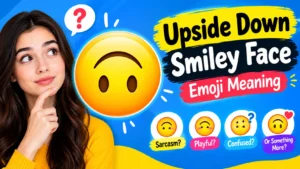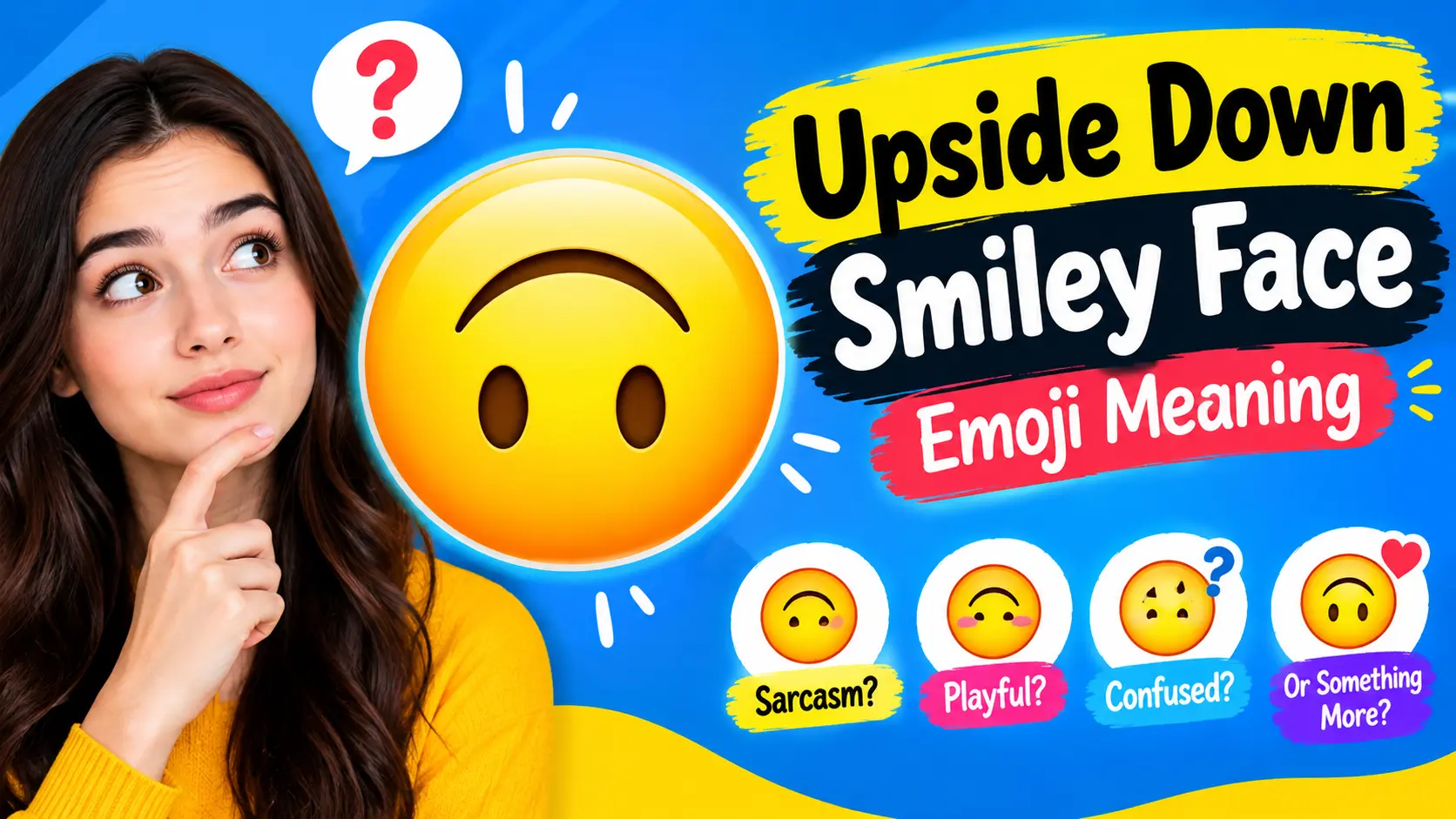
Have you ever received an upside-down smiley face 🙃 in a text message and wondered what the sender was really trying to say? The Upside Down Smiley Face Emoji Meaning can be more interesting than you might think!
This playful emoji can express sarcasm, awkwardness, silliness, hidden frustration, or a feeling of pretending everything is fine when it really is not. But its meaning often depends on who sends it and what you are talking about.
For example, when a friend uses 🙃, they might be joking around, while a crush may use it to create a playful or slightly flirty mood.
What Does 🙃 Actually Mean?
The upside down smiley is a face turned on its head, smiling. Officially, it’s meant to convey a sense of “silliness” or “irony.” Unofficially, people use it for a much wider range of feelings:
- Sarcasm (“oh great, another Monday 🙃”)
- Awkwardness or discomfort
- A joke that’s a little dark or ironic
- Playful teasing
- Masking frustration with humor
- Genuine goofiness or lightheartedness
Think of it as the emoji equivalent of a shrug with a smile , it softens whatever was just said, but it doesn’t erase the feeling behind it.
🙃 Meaning in Text Messages
In texting, 🙃 rarely means straightforward happiness. If someone wanted to say “I’m happy,” they’d probably use 😊 or 😄. The upside down version usually adds a twist.
Here’s how it typically reads in a text conversation:
| Situation | Likely Meaning |
| After bad news | “This sucks but I’m trying to laugh it off” |
| After a joke | “That was a little sarcastic/ironic” |
| After a compliment | Playful or slightly teasing |
| Random, no context | Silliness or just vibing |
| After being ignored/left on read | Passive-aggressive humor |
The key thing to remember: 🙃 almost always adds a layer underneath the words. It rarely means exactly what it looks like on the surface.
Meaning Depends on Context , Not Just the Emoji
This emoji changes meaning a lot depending on three things:
- The conversation topic , is it lighthearted or serious?
- The relationship , friend, crush, coworker, family member?
- The tone of the rest of the message , is it followed by a joke, a complaint, or silence?
For example:
- “I failed my exam 🙃” → coping with disappointment through humor
- “You’re so annoying 🙃” → playful teasing between friends
- “Sure, whatever you say 🙃” → sarcasm, possibly a little annoyed
Never assume the meaning without looking at what came before it.
🙃 Meaning From a Girl
When a girl sends 🙃, it often carries a light, playful, or slightly sarcastic tone. It’s commonly used to:
- Soften a joke so it doesn’t sound harsh
- Show she’s being a little sassy or teasing
- React to something awkward or funny without overreacting
- Flirt in a subtle, low-pressure way
If a girl sends this after a conversation with a guy she likes, it can lean flirty , almost like a wink without saying “I’m flirting with you.” Context is everything here. If she’s smiling in person too or replying quickly, it likely leans positive or flirty rather than sarcastic.
🙃 Meaning From a Guy
From a guy, 🙃 tends to carry a similar but slightly different vibe. Guys often use it to:
- Downplay a joke or awkward moment
- Add humor to something slightly embarrassing
- Be sarcastic without sounding rude
- Show interest in a low-key, non-intense way
Guys are less likely to use it as an obvious flirty signal, but it can still show playful interest , especially if it’s paired with continued conversation, quick replies, or inside jokes.
🙃 Meaning From a Crush or Romantic Interest
This is where the emoji gets the most attention. When it comes from someone you’re romantically interested in , or who’s interested in you , 🙃 can mean:
- Playful flirting (“I saw you today 🙃”)
- Nervous excitement dressed up as a joke
- A way to test the waters without being too obvious
- Light teasing that signals comfort and interest
It’s a “safe” flirty emoji because it doesn’t commit to anything. It lets the sender flirt while keeping plausible deniability , if you don’t respond the way they hoped, they can play it off as a joke.
Example:
“I might have thought about texting you all day 🙃”
This reads as flirty, a little vulnerable, and intentionally casual.
Friendly vs Romantic Meaning: How to Tell the Difference
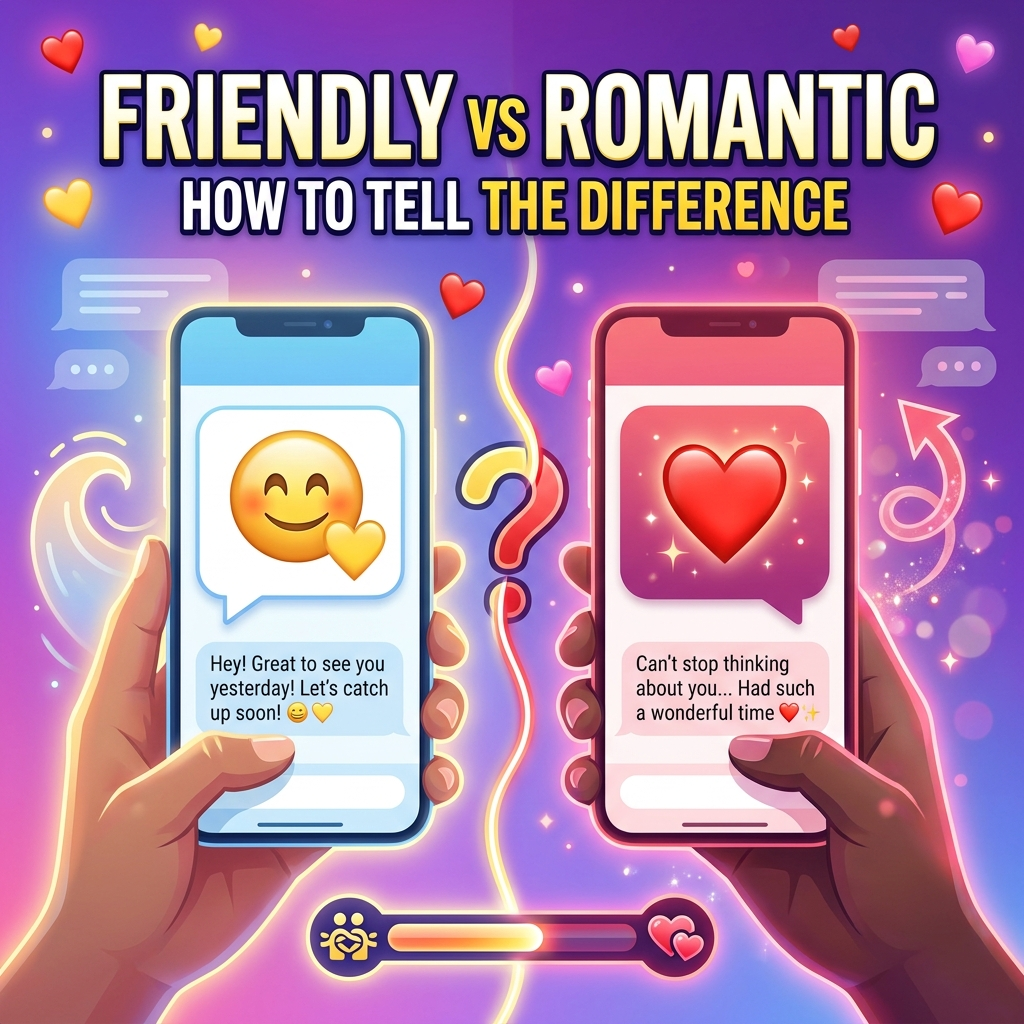
Since 🙃 works in both friendly and romantic contexts, here’s a simple way to tell them apart:
Friendly Use
- Sent in group chats or casual banter
- Follows jokes about everyday stuff (school, work, plans)
- No consistent pattern of extra attention
- Used the same way with multiple friends
Romantic Use
- Sent one-on-one, especially late at night
- Follows compliments or personal questions
- Paired with quick replies or longer conversations
- Used specifically with you, not with everyone
If someone only uses 🙃 with you and not with their other friends, that’s usually a bigger signal than the emoji itself.
🙃 Meaning on Social Media
On platforms like Instagram, TikTok, and Twitter/X, 🙃 tends to have a slightly different flavor than in private texts. It’s often used for:
- Captioning something ironic or unexpected
- Reacting to relatable, chaotic, or “why me” moments
- Adding humor to a vent post without sounding too negative
- Commenting on someone’s post in a teasing way
Example caption:
“Studied all night, still bombed the test 🙃”
Here it signals resigned humor , frustration wrapped in a joke, which is a very common way this emoji is used publicly.
Common Situations Where 🙃 Is Used
- Reacting to plans falling through
- Responding to awkward or cringe moments
- Making light of bad days
- Teasing a friend or crush
- Replying to something you don’t fully agree with
- Softening a complaint so it doesn’t sound harsh
- Filling silence when you don’t know what else to say
Realistic Text Message Examples
Sarcastic:
A: “Traffic added an hour to my commute today.” B: “Love that for you 🙃”
Awkward:
“I accidentally called my teacher ‘mom’ in class 🙃”
Coping with bad news:
“Got rejected from the job 🙃 guess I’ll keep looking”
Flirty (from a crush):
“Guess who’s thinking about you right now 🙃”
Friendly teasing:
“You really wore that outside? 🙃”
Notice how the same emoji fits completely different emotional tones , that’s exactly why context matters more than the symbol itself.
How to Respond to 🙃
Not sure how to reply? Match the energy of the message instead of overanalyzing the emoji alone.
- If it seems sarcastic: Respond with humor or agreement, like “honestly, same 😩”
- If it seems awkward: Reassure them or laugh it off with them
- If it seems flirty: Playfully tease back or ask a follow-up question to keep the conversation going
- If you’re unsure: Ask casually , “wait, are you being sarcastic 🙃” often gets an honest answer
The safest approach is mirroring their tone rather than guessing too hard.
Similar Emojis and How They’re Different
| Emoji | Meaning | How It Differs From 🙃 |
| 😊 | Genuine warmth or happiness | Straightforward, no hidden sarcasm |
| 😉 | Wink, flirty or joking | More direct flirting signal |
| 😏 | Smug or suggestive | Bolder, more confident tone |
| 🙂 | Neutral or polite smile | Can feel flat or passive |
| 😅 | Nervous or relieved laugh | Shows visible awkwardness, less mysterious |
| 🤪 | Silly, goofy | Purely playful, no sarcasm |
🙃 stands out because it’s intentionally ambiguous , it lets the sender express something without fully committing to a tone.
Common Misunderstandings About 🙃
- “It always means someone is upset.” Not true , it’s often just humor or lightheartedness.
- “It’s always flirty.” Only in certain contexts, especially one-on-one conversations.
- “It’s the same as 🙂.” Not quite , 🙃 usually adds sarcasm or a twist, while 🙂 is more neutral.
- “If a girl/guy sends it, they definitely like you.” It can suggest interest, but it’s not confirmation on its own.
- “It means someone is being fake.” It’s more about softening tone than hiding true feelings.
Misreading this emoji is common because people expect a fixed meaning when it’s really a flexible one.
Frequently Asked Questions
1. What does 🙃 mean in a text message?
It usually signals sarcasm, humor, or a lighthearted way of dealing with something awkward or unexpected. The exact meaning depends on the message it’s attached to.
2. Does 🙃 mean someone likes you?
It can, especially if it’s used in flirty or personal conversations. But it’s not a guaranteed sign of romantic interest , check the rest of the conversation for clues.
3. Is 🙃 the same as 🙂?
No. 🙂 usually reads as neutral or polite, while 🙃 often carries sarcasm, irony, or playful energy.
4. Why do people use 🙃 instead of saying how they feel?
Because it softens a message. It lets someone express frustration, awkwardness, or flirtation without being too direct or serious.
5. How do I know if 🙃 is sarcastic or flirty?
Look at the context: sarcasm usually follows complaints or bad news, while flirty use tends to appear in one-on-one chats, compliments, or playful teasing.
Final Thoughts
The upside down smiley face emoji doesn’t have one fixed meaning , and that’s exactly what makes it so widely used. It can mean sarcasm, awkwardness, playful teasing, or even subtle flirting, depending on who sends it and what’s happening in the conversation.
Instead of trying to decode it in isolation, look at the bigger picture: the relationship, the topic, and the tone of the message around it. Once you start reading it in context, this tricky little emoji becomes a lot easier to understand.