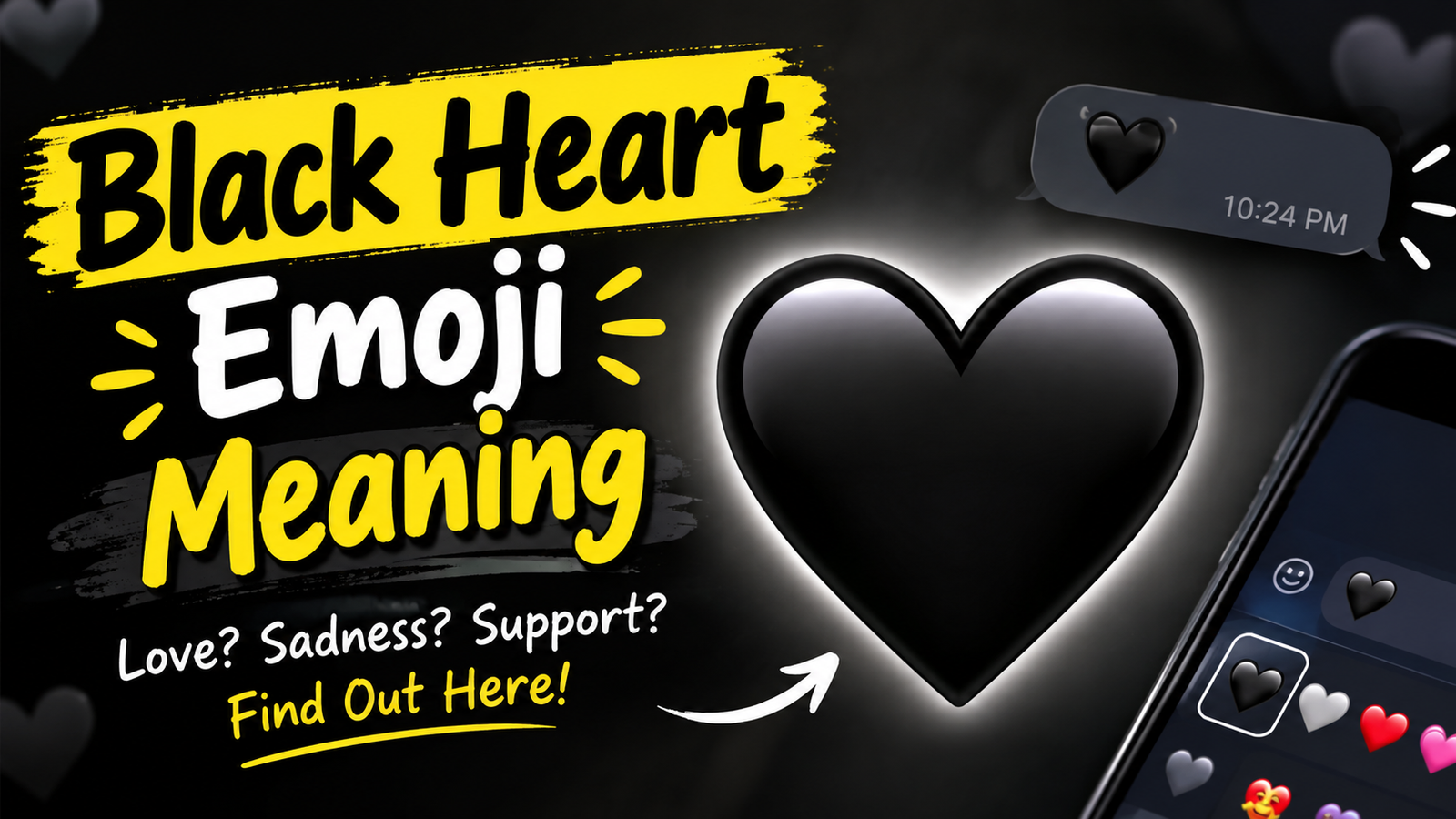
Have you ever received a 🖤 and wondered what the sender was really trying to say? The Black Heart Emoji Meaning can be surprisingly deep, emotional, and even playful depending on the conversation.
Unlike the classic red heart ❤️, the black heart 🖤 can express mystery, dark humor, sadness, emotional strength, support, or a unique kind of affection.
Sometimes, people use it to show love in a stylish or less traditional way, while other times it may communicate sympathy, heartbreak, or a shared interest in darker aesthetics.Let’s break it all down.
What Does the Black Heart Emoji Actually Mean?
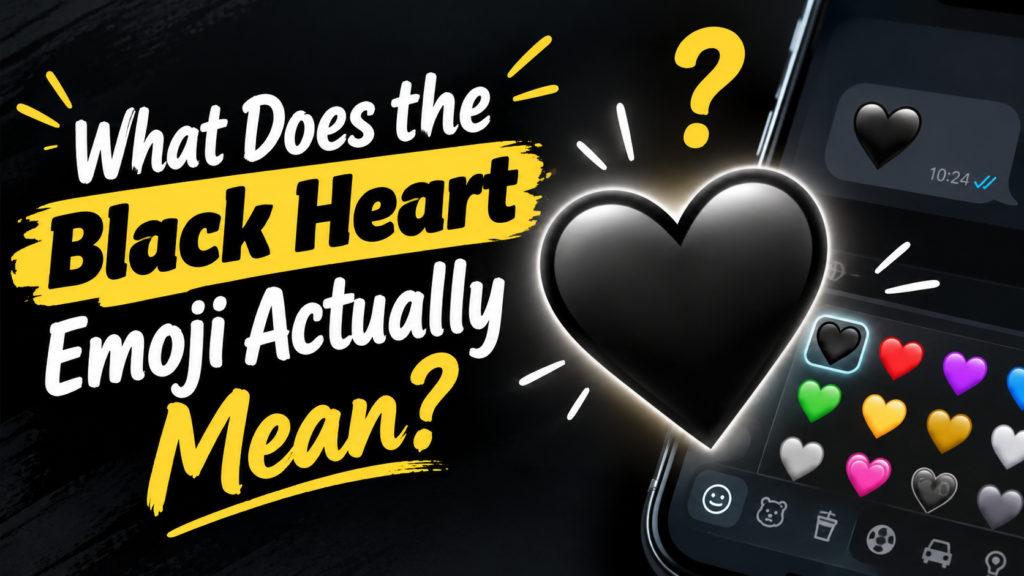
The black heart emoji was added to emoji keyboards years ago, and unlike most heart emojis (which usually signal warmth or romance), 🖤 sits in its own category. It’s associated with:
- Dark or edgy affection , love that doesn’t feel like a greeting card
- Alternative or goth aesthetics , used a lot in fashion, music, and art communities
- Sarcasm or dark humor , a joking way to say “I’m dead inside” or “this is so bad it’s funny”
- Grief or sorrow , sometimes used to mark a loss or a hard time
- Deep, unconventional love , a bond that feels intense, sometimes a little chaotic, but genuine
Unlike 💔 (broken heart), 🖤 doesn’t automatically mean something ended badly. And unlike ❤️, it doesn’t scream “I love you” in a soft, classic way. It’s more layered than both.
Black Heart Emoji Meaning in Text Messages
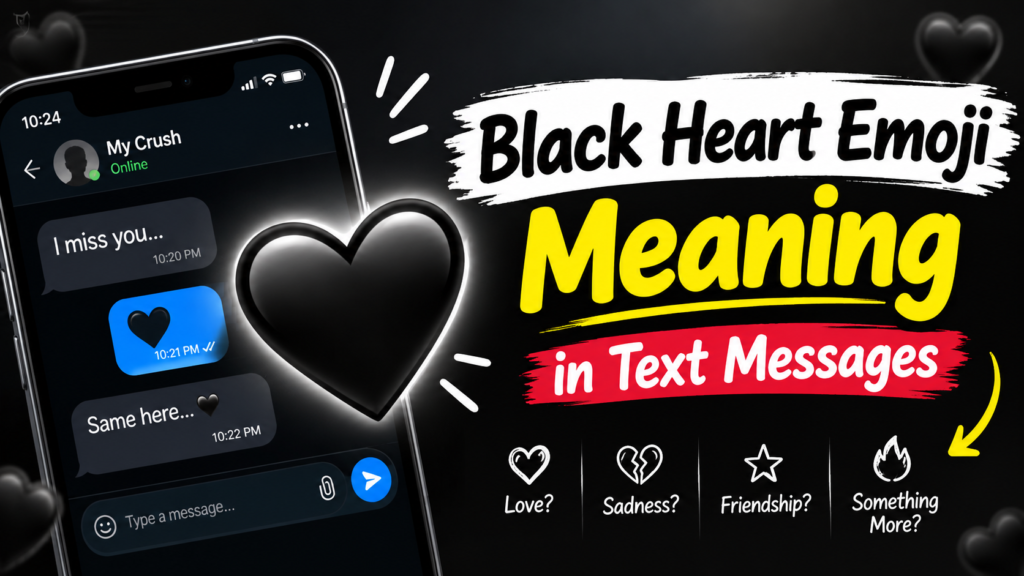
When someone sends you 🖤 in a text, the meaning almost always depends on the conversation that came before it. That said, here are the most common uses:
- As a sign-off , replacing “love you” with something that feels less cheesy
- After a joke or sarcastic comment , a way of saying “lol, dark, but true”
- To show support during a rough moment , like a quieter version of “I’m here for you”
- As a compliment on style or mood , especially after a photo or outfit post
- To match someone’s vibe , some people just prefer black hearts over red ones because it feels more “them”
If you’re trying to figure out black heart emoji meaning in text specifically, look at the tone of the whole conversation, not just the emoji itself. It rarely stands alone with one fixed meaning.
Does Context Change the Meaning? Yes , Here’s How
This is the part most explanations skip: 🖤 is a chameleon emoji. The exact same symbol can mean completely different things depending on:
1. Who’s Sending It
A close friend, a romantic partner, and a casual acquaintance can all send 🖤 and mean three totally different things.
2. The Platform
A 🖤 under an Instagram post reads differently than a 🖤 at the end of a private text.
3. The Relationship History
If you’ve been flirting for weeks, 🖤 might feel romantic. If you’re just mutuals online, it might just mean “cool post.”
4. The Conversation Topic
🖤 after “I just adopted a black cat” means something very different than 🖤 after “I miss you.”
Black Heart Emoji Meaning From a Girl
When a girl sends 🖤, it often leans toward one of these:
- She thinks something is aesthetically cool (an outfit, a song, a photo)
- She’s being playfully dark or sarcastic
- She’s showing quiet support without making it a big emotional moment
- If there’s already romantic tension, it can be a low-key way of expressing affection without saying “I like you” outright
Girls tend to use 🖤 as a vibe emoji more than guys do , it often reflects personal aesthetic (goth, alt, minimalist) rather than a direct emotional statement. So context really matters here more than gender-based assumptions.
Black Heart Emoji Meaning From a Guy
When a guy sends 🖤, it’s often:
- A less “soft” way of showing affection (some guys avoid ❤️ because it feels too obvious or vulnerable)
- A reaction to something he finds impressive, cool, or attractive
- A way to show loyalty or deep respect , almost like “ride or die” energy
- In a romantic context, it can genuinely replace “I love you” for guys who aren’t big on typing that out directly
If a guy who doesn’t usually use hearts suddenly sends you 🖤, that shift itself can be meaningful , it may signal he’s more comfortable or more invested than before.
Black Heart Emoji Meaning From a Crush or Romantic Partner
This is where people get the most confused, so let’s simplify it.
From a crush: 🖤 from a crush usually signals interest without full commitment to saying “I like you.” It’s a middle ground , more than a like, less than a confession. It often shows up:
- After you send something personal
- As a response to a compliment
- Randomly, as a way to stay on your radar
From a partner: In an established relationship, 🖤 often becomes a personal symbol between two people. It might mean:
- “I love you” in your specific relationship’s shorthand
- “This is real, but it’s ours , not the cliché version”
- Comfort and depth, rather than new excitement
Some couples adopt 🖤 specifically because red hearts feel “too public” or overused, and black feels more private and specific to them.
Friendly vs Romantic Meaning: How to Tell the Difference
Here’s a simple comparison table to help sort this out:
| Situation | Likely Meaning |
| Sent after a funny or dark joke | Friendly / humorous |
| Sent after a compliment on looks | Possibly romantic |
| Sent consistently in every message | Leaning romantic or very close friendship |
| Sent under a group photo | Friendly, general appreciation |
| Sent late at night, one-on-one | Often more emotional or romantic |
| Sent after discussing music, fashion, or aesthetic | Friendly, style-related |
| Sent after a vulnerable conversation | Emotional support, not necessarily romantic |
The biggest giveaway isn’t the emoji , it’s the pattern. One 🖤 means little. Repeated, consistent use in personal conversations usually points to something deeper.
Black Heart Emoji Meaning on Social Media
On platforms like Instagram, TikTok, and Twitter/X, 🖤 takes on a slightly different role than in private texts.
Common social media uses:
- Under aesthetic or fashion posts , signaling “this look/photo is cool”
- In bios , often tied to an alternative, goth, or minimalist personal brand
- As a caption , paired with moody or artistic photos
- In tribute or memorial posts , showing respect or remembrance
- As a subtle romantic signal , commenting 🖤 on a partner’s post without being overly public about it
Because social media is more public, people often use 🖤 there when they want to express something without being too obvious , it reads as more understated than ❤️ or 😍.
Common Situations Where the Black Heart Emoji Is Used
To make this practical, here are real scenarios where 🖤 shows up:
- Reacting to a sad story , showing quiet solidarity
- Complimenting an outfit or photo , “this is aesthetic”
- Ending a heartfelt message , replacing “love you” with something less direct
- Responding to dark humor , “I felt that, and it’s funny/sad”
- Supporting a friend going through something hard
- Signing off in a goth, punk, or alt-culture context
- Marking loss or grief , a memorial post or anniversary of a death
- Flirting subtly , testing the waters without full vulnerability
Realistic Text Message Examples
Example 1 , Friendly:
“Just adopted a black cat 🖤” “Obsessed, send pics”
Here, 🖤 is purely aesthetic , no romantic meaning at all.
Example 2 , Supportive:
“Today was rough, my grandma’s surgery didn’t go how we hoped” “🖤 I’m here if you need to talk”
Here, 🖤 replaces words when someone doesn’t know exactly what to say but wants to show care.
Example 3 , Romantic/Flirty:
“Can’t stop thinking about last night” “same 🖤”
Here, context (an intimate or emotional prior message) shifts the meaning toward romantic depth.
Example 4 , Dark humor:
“I studied for 10 minutes and failed anyway” “🖤 same energy”
This one is purely sarcastic, no emotional weight behind it.
Example 5 , Established couple:
“Goodnight, love you” “🖤🖤🖤”
In a relationship where 🖤 has become a shared symbol, this is just their version of “I love you too.”
How to Respond to a Black Heart Emoji
Not sure how to reply? Here’s a simple approach:
- If it feels friendly → respond with a similar tone, like 🖤 back, or a casual comment
- If it feels romantic → you can mirror it, or reply with something warmer like ❤️ or a genuine text to test the waters
- If it feels like support during a hard time → a simple “thank you, means a lot” works better than overanalyzing the emoji itself
- If you’re unsure → it’s okay to just respond naturally to the conversation instead of overthinking the symbol
The safest move when confused is to respond to the message, not just the emoji. If someone says “🖤” with no other context, a simple “🖤” or “aww why” can naturally invite clarification.
Similar Emojis and How They’re Different
| Emoji | Common Meaning | How It Differs From 🖤 |
| ❤️ Red heart | Classic love, warmth | More direct and universally romantic |
| 🤍 White heart | Purity, calm, minimalist love | Softer, less edgy than black heart |
| 💔 Broken heart | Heartbreak, sadness | Signals an ending or pain, not depth |
| 🤎 Brown heart | Support, solidarity (also used for representation) | Less about mystery, more about grounded connection |
| 💜 Purple heart | Compassion, sometimes fandom-related | Warmer and more emotionally open |
| 🖤 Black heart | Edgy love, dark humor, depth, sorrow | More ambiguous and context-dependent than all of the above |
The key difference: most heart emojis have a fairly fixed emotional tone. 🖤 is the most flexible , its meaning bends entirely around the situation.
Common Misunderstandings About the Black Heart Emoji
Myth 1: It means hate or negativity. Not true. The color black doesn’t equal a negative meaning here , it’s more about intensity, edge, or subtlety than hostility.
Myth 2: It always means “I love you.” Also not accurate. It’s often just aesthetic or humorous, especially in casual conversations.
Myth 3: Only “goth” people use it. While it’s popular in alt and goth communities, it’s widely used across all kinds of people now , it’s mainstream at this point.
Myth 4: It signals the end of a relationship. That’s more the role of 💔. 🖤 doesn’t inherently suggest breakup or heartbreak unless the conversation itself points that way.
Myth 5: One black heart always means something huge. Sometimes it really is just a reaction to a photo or joke , not everything is a hidden message.
Frequently Asked Questions
1. What does the black heart emoji mean from a girl?
It usually reflects aesthetic appreciation, dark humor, or quiet emotional support , and can lean romantic if there’s already flirty context in the conversation.
2. What does the black heart emoji mean from a guy?
It’s often a lower-key way for guys to show affection or respect without using a “softer” emoji like ❤️, and can genuinely mean deep care in a relationship.
3. Does the black heart emoji mean someone is sad?
It can, especially if used after a sad message or tough situation, but it doesn’t always signal sadness , context is everything.
4. Is the black heart emoji romantic or just friendly?
Both are possible. Look at the conversation pattern, timing, and relationship history rather than the emoji alone to figure out which one applies.
5. What’s the difference between a black heart and a red heart emoji?
A red heart (❤️) is a direct, classic symbol of love, while a black heart (🖤) is more ambiguous , it can mean love, humor, style, or sorrow depending on the situation.
Final Thoughts
The black heart emoji doesn’t come with one fixed definition, and that’s exactly what makes it interesting. It can mean deep love, quiet support, dark humor, or simple aesthetic appreciation , sometimes all in the same week, from the same person, depending on what’s going on.
If you’re trying to decode a 🖤 someone sent you, don’t just stare at the emoji. Look at the conversation around it, who sent it, and how they usually communicate. That context will tell you far more than the symbol ever could on its own.