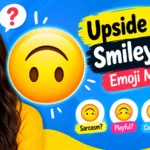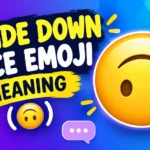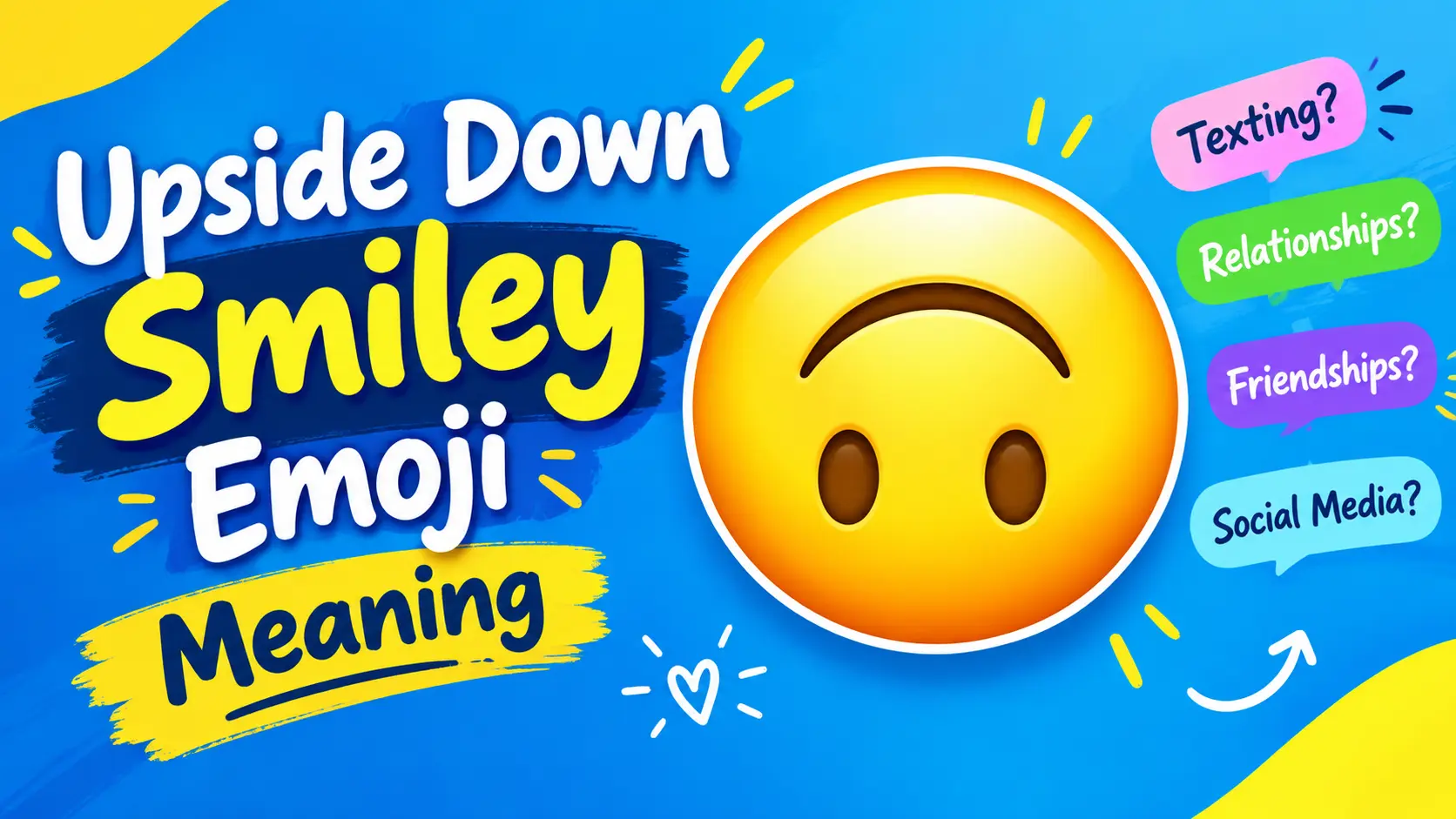
Have you ever received an upside-down smiley emoji 🙃 and wondered, “What does that actually mean?” The upside-down smiley emoji can be surprisingly confusing because it often says more than just “I’m smiling.
” In text messages, people use 🙃 to show awkwardness, sarcasm, playful frustration, embarrassment, irony, or a situation where they are trying to laugh instead of complain.
Its meaning can change completely depending on the conversation, the person sending it, and what happened before it.
What Does 🙃 Exactly Mean?
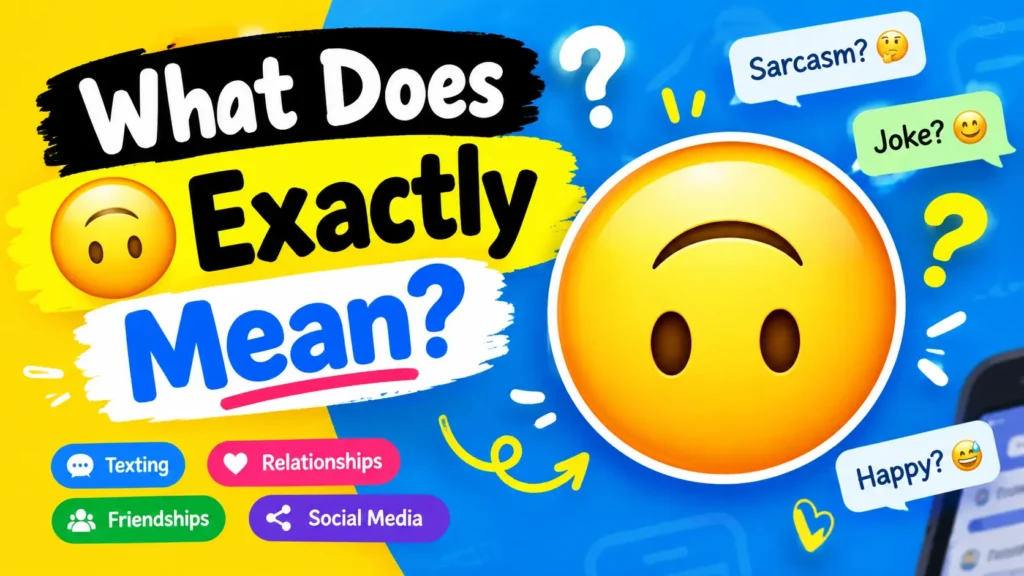
The upside down smiley emoji shows a classic smiling face, just flipped vertically. Officially, Unicode calls it “upside-down face,” and most people read it as a face that’s smiling through something a bit off, ironic, or awkward.
Think of it as a smile that isn’t quite sitting right , because emotionally, something isn’t quite sitting right either. It’s rarely used to express plain, uncomplicated happiness. Instead, it usually carries a second layer underneath the smile:
- Sarcasm (“sure, that’s totally fine 🙃”)
- Awkward or nervous energy
- Silliness or goofiness
- Passive-aggressiveness
- Mild frustration hidden behind humor
- Flirty teasing
This double-layered quality is exactly why 🙃 confuses so many people. A single 😊 is simple. The upside down smiley is not.
🙃 Meaning in Text Messages
In texting, 🙃 usually softens or complicates whatever was just said. People rarely use it when they mean something 100% positive , a regular smiley or laughing emoji covers that. The upside down face gets pulled out when there’s a twist.
Common uses in text:
- Sarcastic agreement: “Sure, I’d LOVE to redo this whole project 🙃”
- Masking frustration: “Guess I’m working the weekend again 🙃”
- Deflecting awkwardness: “So that was weird 🙃”
- Playful teasing: “You’re such a dork 🙃”
- Nervous honesty: “I might have feelings for you 🙃”
Basically, whenever you see 🙃, ask yourself: does the sentence above it sound like it needs an asterisk? That asterisk is what the emoji is doing.
Different Meanings Depending on Context
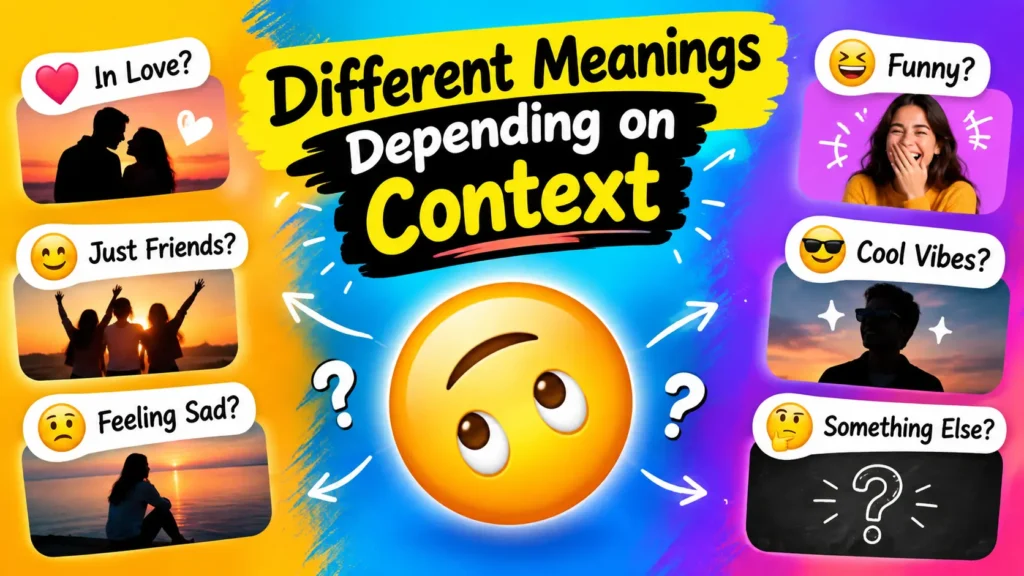
Context changes everything with this emoji. Here’s how the meaning shifts across common situations.
In a Casual Conversation
Between friends chatting about everyday stuff, 🙃 usually just adds light sarcasm or humor. It’s low-stakes and used almost like a verbal shrug.
In a Stressful or Annoying Situation
When someone’s venting about work, school, or a bad day, 🙃 often replaces saying “I’m annoyed but trying to laugh about it.” It’s a coping-mechanism emoji as much as an expression one.
In a Flirty Conversation
Between people who are into each other, the same emoji can mean nervous excitement, teasing, or “I like you but I’m playing it cool.” The vibe becomes noticeably softer and more personal.
In an Argument or Tense Exchange
Here’s where 🙃 gets its more negative reputation. In a disagreement, it can come across as passive-aggressive , like someone smiling through gritted teeth. “Wow, okay 🙃” in an argument reads very differently than the same phrase in a joke between friends.
🙃 Meaning From a Girl
When a girl sends 🙃, it often depends heavily on the emotional tone of the conversation, but a few patterns show up a lot:
- In friendly chats: she’s probably being playful, sarcastic, or a little goofy.
- In a stressful topic: she might be venting while trying not to sound too negative.
- In a flirty or crush-related chat: it can signal shy excitement , she likes what’s happening but doesn’t want to seem too obvious about it.
- After a mixed-signal moment: it can mean “I don’t totally know how I feel about this either.”
If a girl uses 🙃 after something you said that could be read as sweet or flirty, there’s a decent chance she’s smiling and a little flustered, not annoyed.
🙃 Meaning From a Guy
From a guy, 🙃 tends to lean slightly more toward humor, deflection, or sarcasm than deep emotional nuance , though that’s not a hard rule.
- In banter: it’s usually just a joke or teasing tone.
- When venting: it often means “this is annoying but I’m keeping it light.”
- In a flirty exchange: it can be his way of being playful without fully committing to saying something serious.
- After an awkward moment: it often means “well, that was weird, huh?”
Guys often use 🙃 to avoid sounding too intense, especially in early-stage flirting, so don’t assume it means less just because it looks casual.
Meaning From a Crush or Romantic Partner
This is where 🙃 gets the most emotional weight. When it comes from someone you’re romantically interested in , or who’s interested in you , it usually falls into one of these categories:
- Nervous flirting: “I kind of like you 🙃” , the smile is doing double duty as both honesty and a safety net in case you don’t feel the same.
- Playful teasing with affection underneath: especially common once flirting has already started.
- Soft vulnerability: used when saying something a little too real, and the emoji takes the edge off.
- Mixed signals: sometimes it really does mean “I’m not sure how I feel,” especially early on.
If your crush sends 🙃 after a compliment, a confession, or an invitation, it’s rarely a bad sign. It’s more often a sign they care about how you’ll react.
Friendly vs Romantic Meaning
| Context | Friendly Meaning | Romantic Meaning |
| After a joke | Playful sarcasm | Flirty teasing |
| After bad news | Coping humor | Shared vulnerability |
| After a compliment | Deflecting attention | Shy excitement |
| In an argument | Passive-aggressive humor | Hurt feelings softened by a smile |
| Random, no context | Just personality/habit | Testing the emotional waters |
The biggest giveaway between friendly and romantic use isn’t the emoji itself , it’s the sentence around it and the existing dynamic between you two.
🙃 Meaning on Social Media
On platforms like Instagram, TikTok, and Twitter/X, 🙃 shows up a bit differently than in one-on-one texts.
- In captions: it often signals self-aware humor, like “life is chaos but I’m smiling anyway.”
- In comments: usually playful teasing or light sarcasm toward a friend’s post.
- In bios: sometimes used to hint at a quirky, unbothered, “I don’t take things too seriously” personality.
- Replying to a story: often flirty or teasing, especially between people who already talk one-on-one too.
On social media, 🙃 tends to carry less emotional weight than in a private text, since it’s often performing for an audience rather than communicating something personal.
Common Situations Where It’s Used
- Venting about a rough day without sounding too negative
- Responding to plans falling through
- Reacting to something awkward or cringey
- Softening bad news
- Flirting without saying anything too direct
- Making a sarcastic joke land gently
- Reacting to a mixed compliment (“you’re actually kind of funny 🙃”)
- Ending a message that admits something vulnerable
Realistic Text Message Examples
Sarcasm about plans: “Oh cool, so we’re doing this the day before the deadline 🙃”
Coping with a bad day: “Boss just added two more meetings to my calendar 🙃”
Flirty and nervous: “I may have thought about texting you like five times today 🙃”
Deflecting after a compliment: “You’re actually really easy to talk to 🙃” replied to “same, honestly”
Passive-aggressive in an argument: “No, it’s totally fine that you forgot 🙃”
Playful teasing between friends: “You really wore that to the interview? 🙃”
How to Respond to 🙃
Instead of guessing blindly, read the emoji together with the sentence and the relationship. A simple approach:
- Check the tone of the message. Sarcastic, vulnerable, playful, or annoyed?
- Consider your history with this person. Do they use 🙃 often as a habit, or was this a specific reaction?
- Match the energy, then clarify if needed.
Some safe response styles:
- If it seems sarcastic: respond with the same energy , “lol I know, painful” or a laughing emoji.
- If it seems flirty: keep it warm , “haha you’re cute” or ask a light follow-up question.
- If it seems tense: address it gently , “you good?” works better than ignoring it.
- If you genuinely can’t tell: just ask. “Wait, is that a good 🙃 or a bad 🙃?” is a completely normal thing to send.
Similar Emojis and How They’re Different
| Emoji | Typical Meaning | How It Differs From 🙃 |
| 😊 | Genuine, simple happiness | No irony or hidden layer |
| 😅 | Nervous or awkward relief | More visibly anxious, less sarcastic |
| 🙂 | Neutral or polite | Flatter, less playful or emotional |
| 😏 | Smug or flirty confidence | More intentional flirting, less ambiguity |
| 🤡 | Self-deprecating “I messed up” humor | More self-mocking, less layered emotion |
| 🫠 | Overwhelmed or melting from embarrassment | More about being flustered, less sarcastic |
🙃 sits in its own lane because it can hold sarcasm, awkwardness, and affection all at once , most other emojis pick one lane and stay in it.
Common Misunderstandings About 🙃
- “It always means something negative.” Not true , it’s often playful or flirty, not upset.
- “It always means sarcasm.” Also not always true , from a crush, it’s frequently nervous sweetness.
- “It’s the same as a regular smiley, just flipped for fun.” The flip itself usually signals that something’s a little off, even if it’s harmless.
- “If they use it, they’re mad at me.” Usually not , check the full sentence before assuming anger.
- “It has one universal meaning everyone agrees on.” Meaning shifts by generation, region, and personal texting habits, so context always matters more than the emoji alone.
Conclusion
The upside down smiley emoji meaning isn’t fixed , it’s a flexible little symbol that can carry sarcasm, humor, nervousness, flirtation, or quiet frustration, depending entirely on who sent it and what surrounds it.
Rather than assuming the worst (or the best), look at the sentence it’s attached to, your history with the sender, and the overall vibe of the conversation. Once you start reading 🙃 in context instead of in isolation, it stops being confusing and starts being one of the more expressive emojis out there.
FAQs
1. What does 🙃 mean from a girl I like? It often means playful shyness or flirty teasing, especially if it follows a compliment or something personal. It’s rarely a bad sign.
2. Does 🙃 always mean sarcasm? No. While sarcasm is common, it can also express nervousness, awkwardness, coping humor, or flirtation depending on the message.
3. Is 🙃 flirty or just friendly? It can be either. Between friends it’s usually playful sarcasm; between people with romantic interest, it often signals shy or teasing affection.
4. How should I respond to 🙃 in a text? Match the tone of the message it’s attached to. If you’re unsure, it’s completely fine to just ask what they meant by it.
5. Why do people use 🙃 instead of a regular smiley? Because it can hold more than one emotion at once , a regular smiley feels straightforward, while 🙃 signals “there’s a little more going on here.”