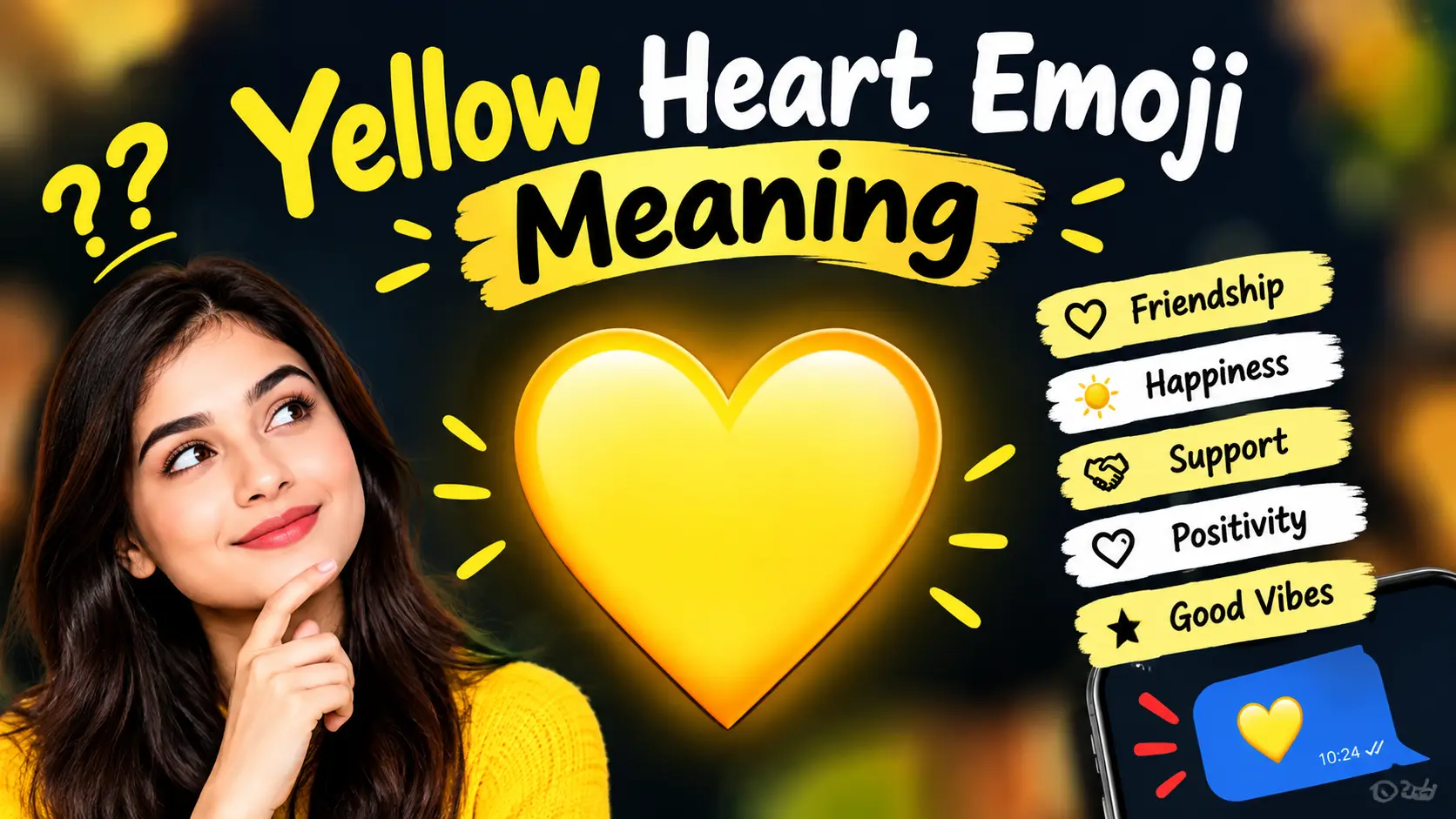
Have you ever received a yellow heart 💛 in a text message and wondered what the sender really meant? You are not alone! The Yellow Heart Emoji Meaning can be surprisingly interesting because this cheerful emoji often expresses friendship, happiness, kindness, and genuine affection.
Unlike the red heart, which is commonly associated with romantic love, the yellow heart usually carries a warm, positive, and friendly feeling.
But does it always mean friendship, or can it also express love and support?
What Does the Yellow Heart Emoji Actually Mean?
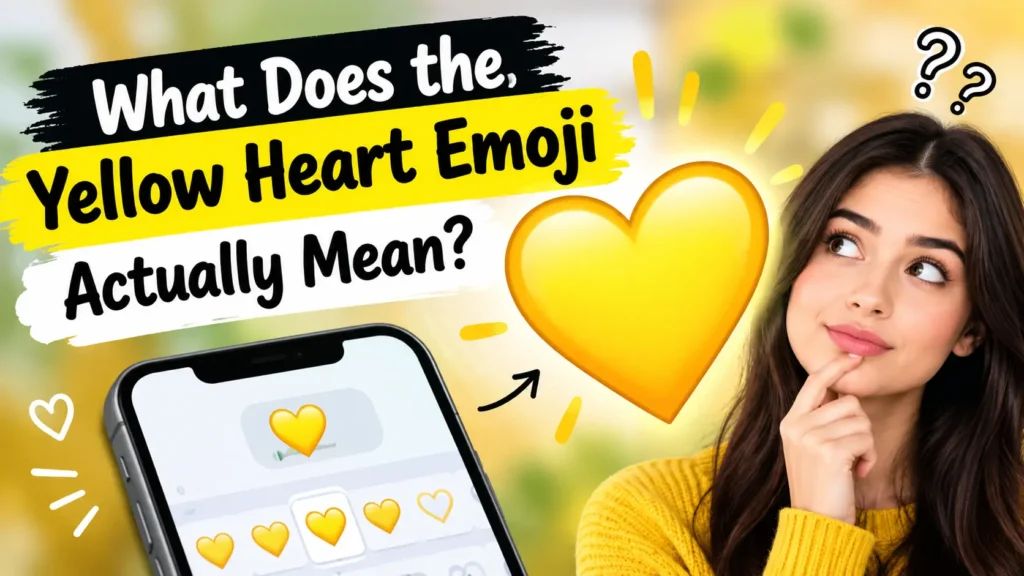
At its core, 💛 represents:
- Happiness and joy – yellow is the color of sunshine, so the emoji naturally carries a cheerful, upbeat vibe
- Friendship – it’s one of the most common “just friends” hearts, often paired with best-friend energy
- Warmth and comfort – used to show someone they make you feel good, safe, or supported
- Platonic affection – care without romantic pressure attached
Unlike the red heart ❤️, which almost always signals romantic love, the yellow heart is more flexible. It leans platonic by default, but it can shift into something romantic depending on the context of the conversation.
Yellow Heart Meaning in Text Messages
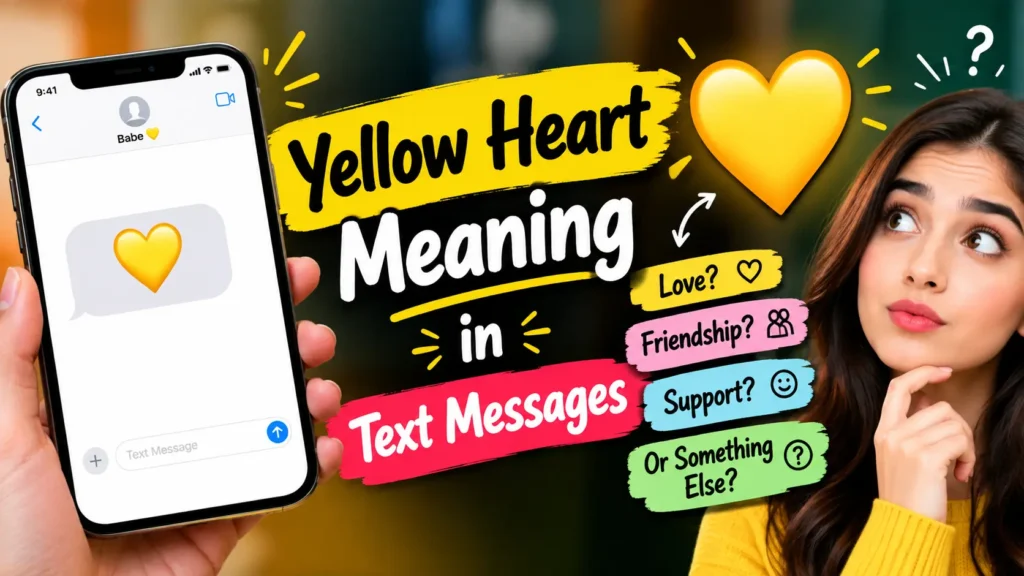
When someone sends 💛 in a text, it’s rarely random. Context clues matter more than the emoji itself. Here’s how to read it:
| Situation | Likely Meaning |
| Sent after a fun hangout | “That was a great time, I appreciate you” |
| Sent as a random check-in | “Thinking of you, hope you’re good” |
| Sent after a compliment | “Aww, that made me happy” |
| Sent with “miss you” | Genuine platonic (or budding romantic) affection |
| Sent repeatedly over weeks | A real, ongoing connection is forming |
The tone of the rest of the message matters a lot. “Had so much fun today 💛” reads completely differently from “I can’t stop thinking about you 💛.”
Does the Yellow Heart Meaning Change Depending on Context?
Yes , and this is the most important thing to understand. There’s no single fixed rule. The same emoji can mean:
- Pure friendship between two people who’ve known each other for years
- A safe way to test the romantic waters without saying “I like you” outright
- Support during a hard time (“I’m here for you”)
- A sign-off used casually, almost like a period at the end of a sentence
The relationship history between the sender and receiver is the biggest clue. If you’ve never been romantic and never flirted, it’s almost certainly platonic. If there’s already tension or flirting happening, the yellow heart can be a soft, low-risk way to show interest.
Yellow Heart Meaning From a Girl
When a girl sends 💛, it typically means one of these things:
- She sees you as a close, valued friend
- She’s expressing gratitude or happiness about something you did
- She’s being warm without wanting to send mixed signals a red heart might create
- If there’s flirting already happening, it can be a gentle romantic hint
Girls often use the yellow heart specifically because it avoids the intensity of red or pink hearts. It lets her express real affection while keeping things light and undefined , which can be intentional if she’s unsure how you feel back.
Yellow Heart Meaning From a Guy
Guys tend to use 💛 a bit less frequently than girls overall, so when a guy does send it, it can carry a little more weight. Common meanings:
- Genuine appreciation for a friendship
- A subtle way of showing he cares, without seeming “too much”
- Support or encouragement (“proud of you,” “I’ve got your back”)
- A cautious first step toward showing romantic interest
If a guy who doesn’t usually send emojis suddenly sends a yellow heart, that shift itself is worth noticing.
Yellow Heart From a Crush or Romantic Partner
This is where things get more interesting. If a crush or the person you’re dating sends 💛, it can mean:
- Early-stage interest – they like you but aren’t ready to go full red-heart yet
- Comfort and closeness – especially once you’re already talking or flirting
- Warmth within an established relationship – some couples use yellow as a lighter, playful heart alongside red or pink
In a budding relationship, the yellow heart often functions as a stepping stone. It says “I like being around you” without the pressure of declaring feelings outright.
In an Established Relationship
Once two people are officially together, the yellow heart usually shifts meaning again , it becomes about sunshine, joy, and “you make my life brighter,” used alongside (not instead of) more romantic hearts.
Friendly vs Romantic Meaning: How to Tell the Difference
Since 💛 sits right in the middle of the emotional spectrum, here’s how to figure out which side it’s leaning toward:
Likely friendly if:
- It’s sent after group hangouts or platonic plans
- The conversation has no flirty undertone
- You’ve been friends for a while with no romantic history
- It’s used casually and consistently, not tied to specific emotional moments
Likely romantic (or leaning that way) if:
- It’s paired with compliments about your looks or personality
- It shows up after late-night or one-on-one conversations
- There’s already flirting, inside jokes, or lingering tension
- The person rarely uses emojis but made an exception for you
When in doubt, look at the pattern over multiple conversations rather than a single message.
Yellow Heart Meaning on Social Media
On Instagram, TikTok, and Twitter/X, the yellow heart takes on a slightly different role than in private texts:
- Instagram comments – often used to show support for a friend’s post, like celebrating an achievement or a cute photo
- Captions – frequently paired with sunny, happy, or nostalgic content (summer photos, friend-group pictures, throwbacks)
- Snapchat – this one’s a special case. On Snapchat, 💛 next to a username means you’re each other’s #1 best friend , you send each other the most snaps
- Twitter/X and TikTok – usually a quick, low-effort way to show approval or affection for a post without writing a full comment
Because it’s a “safe” public emoji, people are far more comfortable dropping a yellow heart on a friend’s post than a red one, which can look overly intense in a public comment section.
Common Situations Where People Use the Yellow Heart
- Celebrating a friend’s big news (new job, graduation, engagement)
- Thanking someone for being supportive during a hard time
- Reacting to a wholesome or nostalgic photo
- Signing off a text conversation on a warm note
- Responding to “I love you” from a friend (platonically)
- Showing appreciation in a family group chat
- Letting a crush know you care, without full-on declaring feelings
Realistic Text Message Examples
Here’s how the yellow heart plays out in real conversations:
Platonic example:
“Thank you for listening to me vent earlier, you’re the best 💛”
Supportive example:
“You’ve got this interview tomorrow, I believe in you 💛”
Crush/early romantic example:
“Had such a good time tonight, we should do it again soon 💛”
Established relationship example:
“You always know how to make my day better 💛”
Casual sign-off example:
“Okay heading to bed now, night! 💛”
Notice how the emoji itself barely changes, but the surrounding words completely shift the tone.
How to Respond to a Yellow Heart Emoji
Not sure how to reply? Here’s a simple approach:
- Match the energy first. If the message felt casual and friendly, reply casually.
- Read the relationship context. A yellow heart from your best friend needs a different response than one from a crush.
- When unsure, mirror it back. Replying with 💛 or a warm “aww, love you too” keeps things comfortable without overcommitting.
- If you sense romantic intent and feel the same, lean in. A slightly warmer reply (or a red heart back) can signal you’re open to more.
- If you want to keep it platonic, keep your reply friendly but not flirty. Something like “you’re so sweet, thank you 💛” keeps the tone consistent.
Similar Emojis and How They’re Different
| Emoji | Common Meaning |
| ❤️ Red Heart | Strong romantic love, deep passion |
| 💛 Yellow Heart | Friendship, happiness, gentle affection |
| 💚 Green Heart | Jealousy (playful), nature, sometimes platonic support |
| 💙 Blue Heart | Trust, loyalty, calm affection, sometimes platonic |
| 🧡 Orange Heart | Warmth, encouragement, sits between friendship and romance |
| 💜 Purple Heart | Compassion, sometimes romantic, associated with support |
| 🩷 Pink Heart | Sweet, soft affection, often used for cute or romantic content |
| 💗 Growing Heart | Growing feelings, excitement, admiration |
The main takeaway: red is the clearest romantic signal, yellow and blue lean platonic, and colors like pink, purple, and orange sit somewhere in between depending on the sender.
Common Misunderstandings About the Yellow Heart
- “It always means friendship.” Not true , context can push it romantic, especially with a crush.
- “It always means romance.” Also not true , most of the time, it’s genuinely platonic.
- “It’s a downgrade from a red heart.” Not necessarily. Some people simply prefer yellow because it feels warmer or more personal to them, not because they’re avoiding romance.
- “Everyone uses emojis the same way.” People have their own emoji habits. Someone who uses 💛 constantly with everyone sends it differently than someone who only uses it with you specifically.
- “Snapchat’s best friend heart means something romantic.” It doesn’t , it’s purely about snap frequency, not feelings.
FAQs About the Yellow Heart Emoji
1. What does the yellow heart emoji mean from a girl? It usually signals genuine warmth, friendship, or appreciation. If there’s already flirting happening, it can also hint at romantic interest without being too forward.
2. What does the yellow heart emoji mean from a guy? Similar to a girl’s usage , often friendship or support. Since guys statistically use hearts less often, receiving one can carry slightly more emotional weight.
3. Is the yellow heart emoji romantic or just friendly? It can be either. By default it leans friendly, but tone, timing, and existing chemistry between two people can shift it toward romantic.
4. What does the yellow heart mean on Snapchat specifically? On Snapchat, it shows up next to a username to indicate you’re each other’s #1 best friend based on snap activity , it’s not tied to romantic feelings.
5. Should I reply with the same emoji or something else? Mirroring it back (💛) is usually the safest, warmest response. If you want to shift the tone romantic or keep it platonic, adjust your wording rather than relying only on the emoji.
Final Thoughts
The yellow heart emoji doesn’t come with one fixed definition , it’s shaped by who sends it, the relationship you share, and the conversation happening around it.
Most of the time, it’s a simple, genuine way to say “I care about you” or “you make me happy,” without the intensity of a red heart. Pay attention to the pattern of how someone uses it with you specifically, and you’ll usually have a pretty clear read on what they mean.