Have you ever received a simple 🙂 on WhatsApp and wondered, “What does this emoji actually mean?” You’re not alone.
The WhatsApp 🙂 emoji meaning can change depending on the message, the person sending it, and the mood of the conversation.
Sometimes, 🙂 simply shows friendliness, politeness, or a calm smile. But in other situations, it may feel a little awkward, forced, or even slightly annoyed—especially when it appears after a short or serious message.
What Does 🙂 Actually Mean?
The 🙂 emoji is officially called the “slightly smiling face.” It shows a calm, closed-mouth smile with simple dot eyes. On paper, it’s meant to represent mild happiness or friendliness , a soft, low-key version of a full grin.
But here’s the twist: because the smile is so small and the expression is so neutral, people have started using it in two completely opposite ways:
- As a genuine, gentle “I’m happy” or “that’s nice”
- As a passive-aggressive “okay then” when someone is annoyed but doesn’t want to start a fight
This double life is exactly why 🙂 causes more confusion than almost any other emoji in a WhatsApp chat.
🙂 Meaning in Text Messages
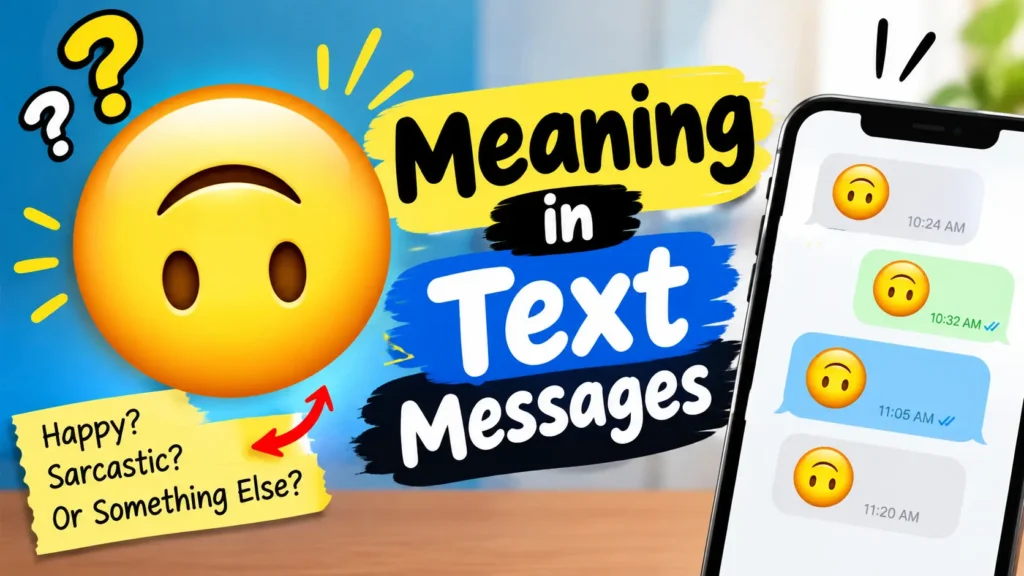
In a typical WhatsApp conversation, 🙂 usually shows up in one of these forms:
- A soft, polite reply , used when someone doesn’t have much to add but wants to keep the tone friendly
- A calm acknowledgment , like saying “got it” or “noted” without sounding cold
- A subtle warning sign , when it replaces a longer response someone would normally give, it can signal they’re holding something back
Compare these two replies to “I might be 20 minutes late”:
- “🙂 no worries, take your time!” , relaxed and genuine
- “🙂” (just the emoji, nothing else) , could mean they’re mildly annoyed but don’t want to say it outright
Same emoji, completely different vibe. The words around it (or the lack of words) do most of the talking.
Different Meanings Depending on Context
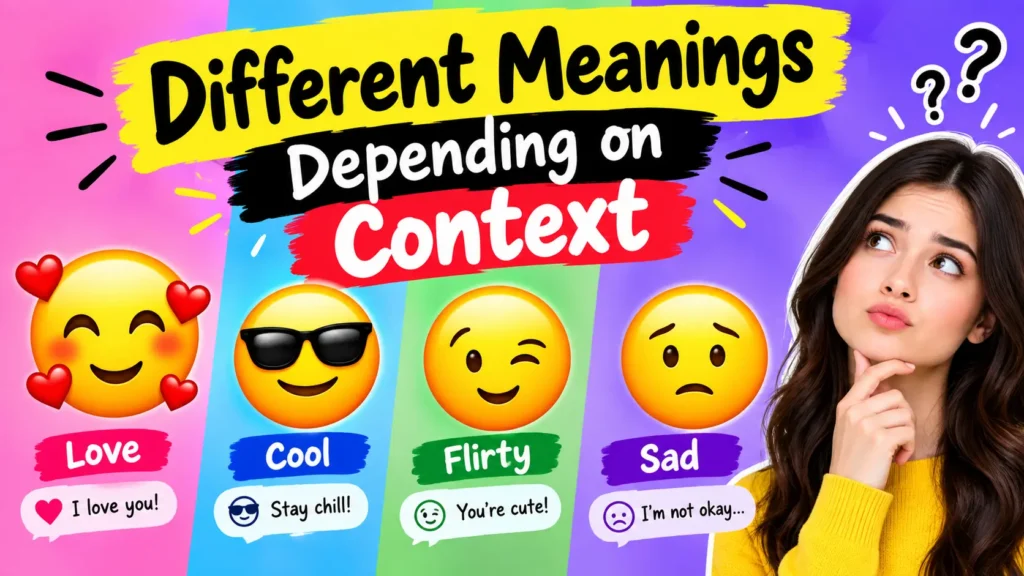
Context is everything with this emoji. Here’s how the setting changes what 🙂 is actually communicating.
1. In a Casual, Everyday Chat
Between people who text casually , coworkers, acquaintances, or someone you’re not super close with , 🙂 usually just means “I’m being friendly and polite.” It’s a safe, neutral emoji that keeps things light without being over the top.
2. In a Serious or Tense Conversation
This is where 🙂 gets its reputation. If someone sends 🙂 right after a disagreement, a late reply, or an awkward moment, it often reads as controlled frustration. It’s the texting version of a tight-lipped smile in real life , polite on the surface, but clearly not thrilled underneath.
3. In a Long, Warm Conversation
If you’re already deep in a comfortable back-and-forth with someone, 🙂 blends in as a soft, happy reaction , similar to a gentle version of 😊. In this setting, it usually just means genuine contentment.
4. As a One-Word (One-Emoji) Reply
When 🙂 is sent completely on its own, especially after you’ve written a longer message, it often feels dismissive , even if that’s not the intention. It can leave the other person unsure whether you’re okay, annoyed, or just busy.
🙂 Meaning From a Girl
When a girl sends 🙂 in a WhatsApp chat, the meaning really depends on your relationship with her and the flow of the conversation:
- From a friend: Usually just a warm, casual way of saying “cool” or “aw, that’s nice” , nothing deeper than friendliness.
- From someone you just met or matched with: Often a polite, slightly reserved response , she’s being nice but not necessarily flirty yet.
- If she’s normally more expressive (uses 😂, ❤️, or long texts) and suddenly switches to 🙂: This is a common sign something’s off , she might be upset, distracted, or losing interest in the conversation.
The biggest clue with girls specifically is a change in pattern. If 🙂 is her usual style, it’s neutral. If it’s a sudden shift from her normal emoji-heavy texting, it’s worth checking in.
🙂 Meaning From a Guy
Guys tend to use 🙂 a little differently, mostly because a lot of guys use fewer emojis overall, so its meaning can be more literal:
- From a guy who barely uses emojis: 🙂 might actually be him making an effort to seem warm or approachable , a bigger deal than it looks.
- From a guy who texts you a lot already: It usually just means genuine agreement or mild happiness, nothing complicated.
- In response to something you said that could’ve upset him: Similar to the girl scenario, 🙂 alone can be his way of shutting down the conversation politely instead of saying he’s annoyed.
With guys, the amount of effort in the rest of the message matters more than the emoji itself. A short “🙂 sounds good” is neutral. Just “🙂” after a disagreement usually isn’t a great sign.
🙂 Meaning From a Crush or Romantic Partner
This is where people overanalyze the most , and honestly, it’s understandable.
From a crush: 🙂 by itself is rarely a strong flirty signal. It’s warmer than no reaction at all, but it’s not the same energy as 😊, 🥰, or 😉. If your crush is using 🙂 consistently, it likely means they’re comfortable and friendly with you, but you shouldn’t read deep romantic intent into it alone. Pair it with how often they text first, how long their replies are, and whether they ask you questions back.
From a partner in an established relationship: Here, tone depends heavily on your usual texting pattern together. If your partner is generally low-key with emojis, 🙂 is just their normal way of showing warmth. But if they usually send more affectionate emojis (❤️, 😘, 🥰) and suddenly downgrade to 🙂, it can be a small, polite signal that something’s bothering them.
Quick way to check: Look at the last few days of your chat. Is 🙂 replacing something warmer than usual? That shift matters more than the emoji itself.
Friendly vs Romantic Meaning
| Context | Friendly Meaning | Romantic Meaning |
| First-time use | Being polite, breaking the ice | Rare on its own , not a strong flirty sign |
| Frequent, consistent use | Comfortable, easygoing communication style | Comfortable and relaxed, but not necessarily romantic intent |
| Sudden switch from warmer emojis | Might just be busy or distracted | Possible sign of annoyance, distance, or something unsaid |
| Paired with jokes or playful text | Just having fun, casual friendliness | Light flirting, especially with teasing follow-up messages |
The short version: 🙂 leans friendly by default. It only becomes romantic when the rest of the conversation (tone, follow-up questions, consistency) supports that reading.
🙂 Meaning on Social Media
Outside of WhatsApp, 🙂 shows up a lot in Instagram comments, captions, and story replies. On social media, it tends to carry a slightly different flavor:
- In comments: Usually a simple, wholesome reaction to a post , “nice” or “love this” energy.
- In captions: Often used to keep a caption feeling calm and understated rather than overly excited.
- In DMs: Similar rules apply as WhatsApp , context and consistency decide the tone.
One thing that’s fairly consistent across platforms: 🙂 rarely reads as sarcastic in public posts (comments, captions) the way it sometimes does in private one-on-one chats. Sarcasm and passive-aggressiveness usually only show up in direct, personal conversations.
Common Situations Where 🙂 Is Used
- Replying to good news that isn’t a huge deal (“I got the report done” → “🙂 nice, thanks”)
- Ending a conversation politely without being cold
- Responding to plans being confirmed (“See you at 7?” → “🙂 yep”)
- Softening a short or blunt reply
- Reacting calmly to something mildly disappointing without escalating
Realistic Text-Message Examples
Example 1 , Friendly and genuine
Friend: “I finally finished moving into the new place!” You: “🙂 that’s awesome, congrats!”
Here, 🙂 pairs with excitement in the wording, so it clearly reads as happy support.
Example 2 , Passive-aggressive
You: “Sorry, I can’t make it tonight, something came up.” Them: “🙂 okay”
Short, no extra words, right after a disappointment , this version usually signals mild frustration, even if it’s not said directly.
Example 3 , Crush, casual and warm
Crush: “Hope your exam went well!” You: “It went okay 🙂 thanks for asking”
This is friendly and appreciative, but not overtly flirty on its own.
Example 4 , Partner, comfortable routine
Partner: “Made dinner, come eat when you’re ready 🙂”
In an established relationship with a generally low-key texting style, this is simply warm and normal.
How to Respond to 🙂
If you’re not sure what someone meant by 🙂, here’s a simple approach instead of guessing:
- If the conversation felt normal before it: Just respond naturally , there’s likely nothing to read into.
- If it came right after something tense, awkward, or disappointing: A gentle check-in works better than assuming the worst. Something like “Hey, everything okay?” keeps things low-pressure.
- If it came from a crush and you want to keep things going: Add a follow-up question or a bit more warmth in your reply rather than mirroring their short energy , it keeps the conversation open.
- If it’s just their normal texting style: Don’t overanalyze it every single time. Some people are naturally minimal texters, and 🙂 is simply their default.
Similar Emojis and How They’re Different
| Emoji | Name | How It Differs From 🙂 |
| 😊 | Smiling face with smiling eyes | Warmer and clearly happy , rarely reads as passive-aggressive |
| 🙃 | Upside-down face | Playful, sarcastic, or a little chaotic , often used for jokes or irony |
| 😐 | Neutral face | Flatly neutral or unimpressed, no warmth implied at all |
| 🥲 | Smiling face with tear | Bittersweet , happy and a little sad at the same time |
| 🙂↕️ / 🙂↔️ | Head shake/nod variants | Adds a clear yes/no gesture, removing most of the ambiguity |
The key difference is that 😊 almost always reads as genuinely happy, while 🙂 sits in a gray zone that depends entirely on delivery and context.
Common Misunderstandings About 🙂
- Assuming it’s always passive-aggressive. For a lot of people, especially those who don’t use many emojis, 🙂 is just their normal, friendly go-to.
- Assuming it’s always romantic when a crush uses it. On its own, it’s more “comfortable and warm” than “into you.”
- Reading too much into a single message. One 🙂 rarely tells the full story , the pattern across a conversation matters far more.
- Ignoring generational and personal texting habits. Some people simply prefer minimal, calm emojis over expressive ones, and 🙂 fits that style without any hidden meaning.
Frequently Asked Questions
1. What does 🙂 mean from a girl on WhatsApp? It usually means friendly warmth or politeness. If it’s a sudden change from her normal texting style, it can hint at mild annoyance or distraction, but on its own it’s not a strong negative sign.
2. Does 🙂 mean someone is mad at me? Not necessarily. It can mean that, but only when it appears right after something disappointing or tense and replaces what would normally be a longer, warmer reply. Context is what decides this, not the emoji alone.
3. Is 🙂 a flirty emoji? Not really on its own. It’s closer to comfortable and friendly than romantic. Flirtier signals usually come from emojis like 😊, 😉, or 🥰, or from the tone of the rest of the message.
4. Why do people use 🙂 instead of 😊? Some people find 🙂 more understated and less “try-hard” than 😊. Others use it specifically because it feels calmer or more neutral, especially in professional or semi-formal chats.
5. How should I reply if someone sends just 🙂? Look at what came before it. If the conversation was normal, reply naturally. If it followed something tense or disappointing, a simple, low-pressure check-in usually works better than guessing.
Final Thoughts
The 🙂 emoji doesn’t have one fixed meaning, and that’s exactly why it trips people up so often on WhatsApp. It can be a warm, easygoing reply or a quiet sign that something’s off , and the only real way to tell the difference is by paying attention to who sent it, how they normally text, and what happened right before it showed up.
Instead of decoding the emoji in isolation, look at the full conversation. That’s where the real answer usually is.